forest's profileWeb/Client UX Platform a...PhotosBlogListsMore Tools Help

Blog


    April 15

    China's #1 Web company announces Silverlight plans

    Tencent Corporation announced plans to use Silverlight for a series of services and media experiences on their portal and in their client apps.  Tencent is an amazing company, largely unheard of outside of China, but arguably the most potent brand here in China, in the form of "QQ", which is what they call their instant messaging application and a series of related social applications for blogging, media, shopping, etc.  The QQ brand touches over 300m unique users, more people than in all of the United States.  It's been incredibly exciting for our team to be working with the Tencent team because of the scope of what's possible for Silverlight in terms of transforming the UX of so many applications types. 

    In the demo that they showed publicly this week, along with their announcement of choosing Silverlight for a series of apps coming in the months ahead, they showed Silverlight integrated with their IM client, within their blog app (for embedable media playback controls, screen shot below), with desktop and browser portal home page "friend notification widgets", and with Silverlight 2's DeepZoom feature applied to e-commerce shopping experience within their Paipai property.

    Video of the demo they showed is up on their labs site, http://labs.qq.com/e/51/, with beta/live Silverlight apps expected this spring/summer.

    image clip_image001

    China's #1 Portal bringing Silverlight Music Experience

    When it rains... Sina, another of China's heavyweight web properties (they are the #1 portal, specializing in news and blogs), announced Silverlight plans and showed a kick ass music search/playback/browsing experience that took inspiration from the "deepzoom" catalog concept seen elsewhere (such as HardRock site) but took it to the next level with awesome interactions, dynamic results that come in from general web search, and integrated media playback.  What was particularly interesting was how quickly they build the app, with their product unit manager claiming that once the visual designs were done, they build the working prototype (with real web service integration) over the weekend!  Extra points for integrating his powerpoint slides into the app itself, as a series of DeepZoom objects in the collection--got a big laugh/"ahh" from the audience at the press event.

    Can't wait to see the app live, expected within a month.  Here's a video recording of the demo, without audio unfortunately (lots of Chinese pop music playing!)

    April 09

    Yahoo! Japan Silverlight Demo

    Yahoo! Japan (Japan's #1 website by unique users and brand impact) demoed a killer UX concept today using Silverlight, a visualization front end for search and tail content that otherwise is hard to navigate/discover across their massive content repository.  Very creative UI concepts, and great integration of some of Silverlight 2's killer features such as DeepZoom and high def videos.  A video of the demo is posted online:

    http://www.microsoft.com/japan/products/expression/creatorsEX/gallery_y.html 

    image

    VOD in Japan with "Gyao Station"

    Continuing the theme of Silverlight wins in the region, the Gyao (Japan's leading VOD portal, owned by USEN, a large film distributor in market) application that went up in February is a nifty mini-portal that culls media options available for playback into a subject/gallery with nice UX.  The app is data driven so Gyao has been very happy using it to program content from their "tail", "new arrival", or "promotion" inventory.  This app is only really viewable/consumable to its fullest when you are within Japan IP address, given the content protection/rights issues associated with a VOD app like this.

    http://www.gyao.jp/newarrival/

    image

    image

    Silverlight in Asia

    Well life and work sure do take up a lot of time, but if there ever was a reason to make time for this work related blog effort, that time must be now!  The parade of amazing Silverlight applications coming online here in Asia is really heating up.  I want to give a shout out first to my favorite Silverlight 1.0 application anywhere in the world, Korea's mNet music video gallery/mashup.  What's so great about this particular app is that it has a database of over 1m music videos/clips from mNet's long running inventory of Windows Media format media assets--great example of how companies with installed base of content can put that online in a richer interface using Silverlight, without any recompressing/transcoding of media.  The UX of this app itself is super slick--great search/sifting with paged results, drag and drop a clip onto the main window for a PIP (picture in picture) playback effect with great performance, including full screen, overlay ads are inserted in periodically.  Do a search for "rain", who is the hot as hell Korean pop star king, crossing over to China/Japan and even the USA (i heard there was an elaborate bit about him on the Colbare Report?)

    http://tvdeep.mnet.com/ (yes, the landing page uses a different technology, but once you get into the player (below) you are in Silverlight nirvana...

    image

    September 27

    Chicken Feet Eating Kids, from Tokyo Airport

    So i'm over in tokyo for a quick visit and had a blast checking out all the Silverlight video stuff that is going on in this market; we have some amazing partners going live in the coming weeks/months.  Here at the airport killing time i thought I would try to post some Silverlight video of my kids eating Chicken Feet and Chicken Head at a tasty roadside restaurant in Beijing last week.  I was blown away at how easy it is with Expression Encoder.  I used a template that is good for blogs (has a huge PLAY button in the middle of the video on load of the page), and an add-in for Windows Live Writer created by james clark which makes brain-dead simple to instantiate a Silverlight application off of the Silverlight Streaming by Windows Live service.  With this free service you get 4gigs of free app hosting, that can be video or it could be a full app/RIA... the hosting is off of our microsoft CDN backbone, so the performance even here in tokyo is super slick.

    Pretty sweet mr. james clark.. check out his blog for more on this magic.

    September 12

    China, my new home

    It's funny, this blog started off with my visit to China earlier this year, and here I am making my first update in a belated long summer, back in China, but this time, as a resident alien!  My family and I just moved here, we are living in "the most important city in the world" (as some are calling it)--Beijing.  I'm joining the team over here to help out with the Microsoft UX business.  I'll be living in China but working with Korea, Japan, India, Australia, and other geographies in the region--there is so much vibrancy to the cultures, the business community, and of course, for the internet and web business.

    This summer summarized in 1 paragraph = shipping Silverlight 1.0 was a blast, and the momentum in the market is awesome... we've got amazing partners lining up worldwide, and i'm really psyched to be over here in Asia where 40%+ of broadband connections exist and the growth and excitement in the market is second to none.  Going to be fun! 

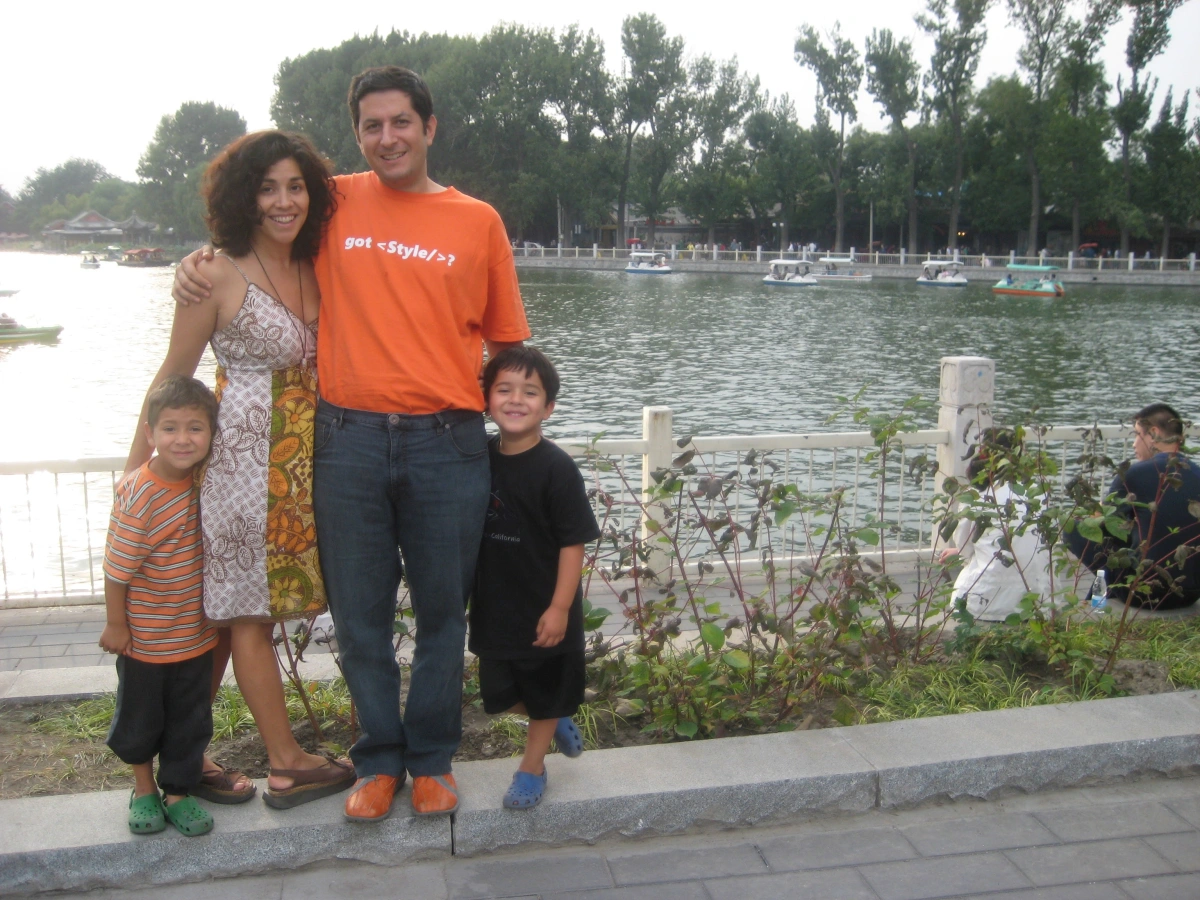
    Here's a picture of me and the kids eating our first of many dim sum meals in town--my 6 year old said "this dim sum is like 10x better than Seattle's", and he is of course underplaying the divide!  Oh-my-god, the "chinese" food back home is indeed a different beast completely from what we've enjoyed here in just our first week.  I'm taking pictures of all the food we eat, plan on making a Silverlight widget of "food forest has eaten in china" for one of my killer demos some day!

    PS: Using Windows Live Writer new beta--at last, red squiggly lines for misspelled words--ahh, technology is wonderful! 

    June 05

    Surface... Minority Report type UX, today...

    Wow, i can't believe it has been over a month since I chimed in to this blog.  I had imagined the post vegas/Mix07 timeframe to be a really prolific one in terms of blogging, as there is so much joy/information to share given our announcements re: Silverlight, Expression, etc. et. all.  My excuses for my silence include, let's see, (a) being completely wiped out emotionally and physically from the strain of the launch activities, (b) being completely wiped out emotionally and physically from the strain of the launch activities, and (c) oh yeah, as if that wasn't enough, my whole family and I got chicken pox--guess when my mother said "i don't remember" when I asked her if i had had it as a kid...

    Alas, now feeling recovered physically and emotionally, high time to share some of the good vibes on Silverlight and Expression.  Anecdotes from the pac-nor-west  (pacific northwest, as we Seattle residents refer to the general area of the USA where we live) are well past due... Silverlight 1.0 beta and 1.1 alpha downloads and community feedback have been incredible.  The Silverlight community site and the Mix site have the current demo/sample repository, which we'll be expanding dramatically in volume over the coming months... Expression shipping... after 3 years of installing weekly builds of these products (during the development of tools like these, there's usually a new build every day, but the install/uninstall process is lengthy so on average I would upgrade to a newer version once a week)--it's almost surreal to just be able to Start - Expression - and pick from Design/Blend/Web/Media.

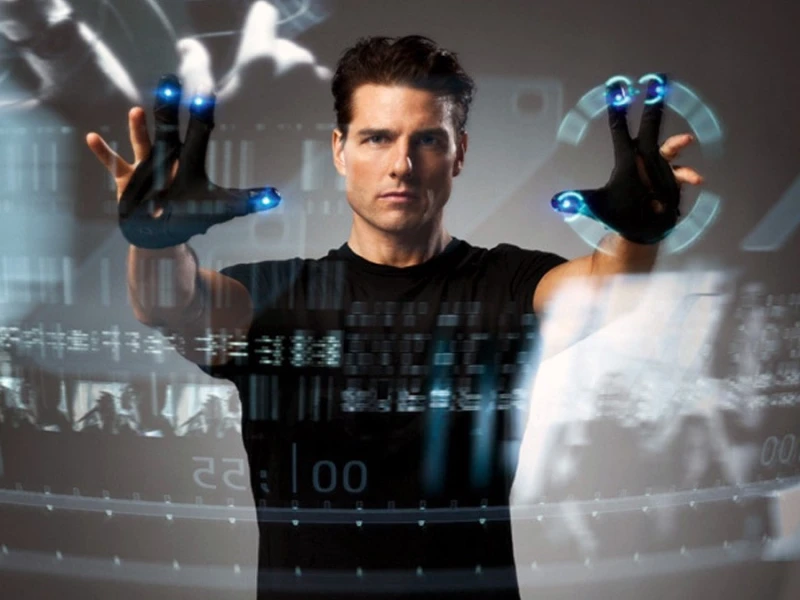
    But the thing that ironically i'm most excited to be able to talk about now is actually the recently announced Microsoft Surface!  Surface has been my secret inspiration for the past 2 years, ever since I first saw and played with the demo, i've been telling friends and colleagues in the UX space that "we are working on some really incredible/sci-fi like stuff" and it has been frustrating to not be able to show/talk about it.  You see, my stump-speech pitch about "the business opportunity of user experience" is predicated on the "transformational" possibilities that come into play when designers and developers can work together to build rich, compelling, highly usable, habit transforming applications that change the way we approach computing/tasks.  To illustrate just how far UX might go, i always allude to the "Minority Report" concepts that were seen in the Steven Spielberg film... super rich visualizations, very gesture based/tactile interfaces, highly integrated environments that appear logically on walls/tables/cereal-boxes/etc--in effect "surfaces" become the user interface to all kinds of experiences, from highly targeted ads, to media consumption, and all manner of work related apps.image

    Well, Microsoft Surface is built using the platform and tools that I market, namely, the Windows Presentation Foundation is the underpinnings of the entire UI--providing rich media, 3d, animation, and hardware based rendering for highly interactive/immersive experiences.  In this regard, the Surface is the best example of what is possible from a "future UX" conceptual perspective... and now that the project is public we'll be able to use/demo the Surface and some of its applications as "reach" inspiration for what Designers and Developers can strive for with Expression/Visual Studio and the .NET Framework.

    I'll get some photos/video together to show what I mean... check out the videos on the Surface website as a starting point...

    April 27

    Vegas!!

    Ahh, back in vegas for pre-Mix event activities.  Hanging with the "UX Eco Team", our global v-team that comprisies User Experience Evangelists and the 20 or so product managers who look after the Expression Studio business.  The excitement is contagious, team is really fired up as we bring all of the planes in for landing Monday morning in the keynote at Mix...

    Fun to see the excitement building elsewhere... i keep getting sent little snippets from here and there with various prognostications re: what we will or won't have to say monday.  Good news is that Monday is almost here... have to remember to enjoy the moment. 

    More monday.

    April 25

    Did I mention we are hiring?

    So I’m sitting here at work late at night working on some of Mix content and announcements for next week (April 30th), and my thoughts keep coming back to “we need more people working on this stuff”. Well, the irony is that we actually have a over 30 open positions for marketing, product management, evangelism, business development, etc. roles related to our tools and platform… we’re just having a really hard time finding the right people.

    So in addition to talking to my friends in the industry and having positions posted on Linkedin and other community job boards, I guess it’s high time I blog about it! We’re hiring!!

    So, if you have a passion for the technology space (tools and APIs for graphical GUI and interactive UI, web media, RIA, standards based websites…) and if you are interested in Silverlight, WPF, ASP.NET, Expression, or Visual Studio product management, product marketing, evangelism, technical advocacy, or any other role that you think might apply (in many locations worldwide, US and international, but especially in lovely Redmond Washington ) give us a shout! You can email me directly at forest dot key at Microsoft dot com (email obfuscated to avoid spam).

    April 18

    Keeping it real at NAB with my "Death Match" friends

    First of all, WOW. What an amazing amount of excitement and press/web coverage for Silverlight. I was absolutely exhausted last week from the press tour we did and the very interesting conversations we had with journalists, analysts, partners, and designer/developers that we met with… alas I felt greatly rewarded by the quantity and quality of discussion that was generated from all points of the industry, everything from general business coverage, the media industry, and the web development and design community. And we’re just getting started, as we have a lot more to talk about in just 2 weeks at our Mix event April 30th.

    Being here this week reminded me of how I felt 15 years ago at my first NAB, when Avid had just introduced the early Media Composer and digital video editing began its march to transform the industry. I feel like a similar wave is arriving, one in which Silverlight will play an important role in driving creative innovation, lowering costs, and improving scalability and performance of media applications on the web. What we think of as “interactive” media today, usually limited to DVD like navigation and not much else, is just the very earliest of creative concepts that will be imagined in the years to come.

    Nothing is better for a software product guy/gal than hearing the oohs and ahhs of customers in response to cool demos that you have labored for months or years to create—and in our off-the-show-floor meeting rooms we’ve been having great conversations with leading media companies who keep bringing more of their peers back for repeat viewings of some of the early prototypes of partner content that will be launching in the weeks and months ahead. However the highlight of my day to day was something unexpected, completely non-technical or business related:

    Over the course of about 90 minutes I ran into three former colleagues of mine, now all at Adobe, each working on different aspects of technology that either directly competes with projects that I work on, or have been mistakenly characterized by the press as doing so! In each case it was just great to see them—to hear how they were doing, to find out about the vacations they had taken to mexico, how their 5 year old was handling playdates with other children, how they had spent time off remodeling homes and flipping them in the market, and the usual “where is so and so working now” networking and search for lost colleagues…. Oh, and we talked about work too, and how excited we are about the industry, and the opportunities for us professionally within our teams, and the expected growth in our target market, what we have liked and disliked about our current employers, and about our crummy commutes and recent horrible work/life balance challenges given the amount of stuff we are working on, etc. And as we said goodbye we wished one another luck, and joked about seeing each other at the next web 2.0 conference (there seems to be one every 3 weeks in the US right now)… and indeed a couple of them I’ll follow-up with in a few weeks to suggest they might consider moving to seattle so we can work together more closely (just kidding)… anyways, this is the face of the “Microsoft-Adobe Death Match, NAB 2007” that the press talked about this week that I’ll remember most about this NAB—underneath the hyperbole and the troll running amuck on the blog comments, there’s just some cool people, doing cool stuff, passionate about their work, and a really exciting, wide open market that is emerging and going to change the world. Designers, developers, and consumers everywhere will benefit.  I’m really glad to be a part of it, and glad to have friends to share that joy and excitement with…

    April 16

    Silverlight is a better name than "WPF/E"?

    I'm in vegas!, and together with some colleagues I had the incredible experience of seeing Prince perform last night at the Rio Casino's 3121 club.  Prince has definitely still got "it"--incredible presence, virtuouso guitar, and time perfected master showman skills that make everyone have a great time when he is in da house.  As I was contemplating at the end of the show, gazing at the spinning "symbol" that he famously changed his name to, I was reminded of my excitement at our "WPF/E"'s technology's soon to be new identity.

    Yes, the "technology formerly known as" WPF/E can now be known as Microsoft Silverlight

    Ok, so the heckling can end (which was well deserved for the WPFE loveliness), as Silverlight is a great brand for this technology--it suggests the attributes of better, richer, more compelling, more productive and satisfying web experiences.  We had a lot of fun testing the name (and the runner ups, none of which were called "Microsoft Media Player", by the way...) and hearing from end user consumers, as well as designers and developers.  What struck me over and over and over again, and has for three years now since my arrival at msft, is how engaged and eager the community is to learn of Microsoft's entry into this part of the market... it's going to be a lot easier to have a conversation about Silverlight then it was for "wa-pu-fee" (as we often annunciated the former name).

    We are going from a crappy code name to a great product name... but as with the 1980s auteur from Minnesotta, the name is not the real issue.  Silverlight will be measured by how it tranforms the experiences of consumers and businesses in the years ahead, and by the creative and technical capabilities that it puts in the hands of designers and developers.

    I'll be blogging a lot more about Silverlight, this week about Silverlight and it's very cool features for cost-effective, high quality deliver of media... and in the weeks ahead leading up to our Mix event April 30th and beyond about the broader development story, tooling, and more

    April 03

    Designers and Developers

    Go to an interactive design or web conference and ask an audience to raise their hands if they are “designers”, then again if they are “developers”, and I am always surprised to see that as much as a third (and sometimes more) of the crowd will just stare back at you perplexed, annoyed, or with playful contempt.  Turns out the label “designer” and “developer” are pretty ill suited to describe many of the ranks of folks who build applications, interactive content, and websites.  More than two distinct populations, these folks form a continuum of personalities, training, passions, and skills that span across uber-design (say, graphic illustration or photography) to uber-development (writing low-level drivers for devices, or algorithms for image processing)… while the majority of folks might be comfortable with one of these terms, for many they fail to deliver any real insight.

    However there are a few statements I’d go on the record as making about the two populations that I think are unequivocally true (and are correlated in numerous quantitative research projects we have conducted):

    • Designers tend to wear black clothes, often turtlenecks, as much as 67% of the time in winter months
    • Developers like free t-shirts received at tech conferences (or as morale boosters at work), where as designers tend to use these shirts as extra materials for collages and cleaning up acrylic paint from their art-boards
    • Most designers can’t do math or quantitative thinking above a high-school level, rather, they make decisions purely through emotional intuition and guessing
    • Developers don’t understand modern art, don’t attend techno or electronic live performances, and only read non-fiction books
    • And contrary to popular belief, Santa Claus is a designer, not a developer…

    Yes, the point is that any characterization of “designer” or “developers” is bound to fail, and the above examples are merely a yarn.  But I bet I had (many of) you on “designers wear black”…

    By now you’ve heard about Microsoft Expression, a new product family from Microsoft “for professional web and interactive designers”.  Yes, “designers”, not “developers” (haven’t I fully undermined the validity of those terms yet?)  Coupled with our Visual Studio product line for “developers”, the two product lines together aim to radically improve the process of collaboration amongst teams of “designer/developers”.  We think role specific tools will help users with different skill sets, sensibilities, and passions to feel more at home in their tool of choice, while simultaneously allowing everyone to just swap projects/files and iterate along the way from concept to delivery of a project. 

    Back in December of 2006 we shipped Expression Web (the rest of the Expression Studio is coming really soon (this quarter)) and we decided NOT to include it within any of the MSDN Subscriptions that many developers and organizations use to stay up to date on all things msft platform/tools.  That was a tough decision because clearly design/experience is becoming a more integral part of the development process.  Not to mention many developers do “design”, and many more still might want to do “design” in the future, why shouldn’t they have access to the product? – or so the question we asked ourselves, and boy did we hear it asked of us from our customer base!  As we listened to the 1000s of points of feedback on this decision, we turned our attention to Expression Blend, and the similar question of whether the interactive design tool in the Expression Studio would likewise be included or not in MSDN subscriptions. 

    Along the way of this dialog with customers and numerous in person meetings and visits to studios and dev shops where real work between designers/developers is taking place, one thing kept striking us over and over again was: whether or not “developers” will actually use Expression or be more satisfied/active inside of Visual Studio, the larger issue is that by not having access to Expression Web/Blend, we might introduce complexity in the designer/developer collaboration that has been so much of our focus in building the Expression family.

    As of today we are adding Expression Web to MSDN Premium subscriptions (and the greater Team Edition offerings), and it will be available for download immediately.  This is the full product license, per other products available in MSDN subscriptions.  We are also going to include Expression Blend  in these subscriptions once it ships. By doing so, we know that we are doing the right thing for not only “developers”, but hope this will also benefit “designers” who adopt the full Expression Studio and work on teams collaboratively with “devs”.  So much of what we are delivering in our platforms (ASP.NET, “WPF/E”, WPF) can only fully be exploited and realized when both the visual/interactive/emotional design is coupled with the functional, programmatic, deployable and secure manifest—and that is the focus that drove this decision, irrespective of what you call the person who does what on the project.

    Check out Soma’s blog on the subject for another perspective.

    March 21

    Springtime Events and the Marketplace of Ideas

    Ahh, listening to the new "Arcade Fire" CD, catching up on email at 3am... (i have forgotten how nice it is to listen to rock music LOUD... with two youngins in the house, i rarely get to actually hear music; one of the benefits of late night email sessions as I have the headphones on!)  Great alNeon Biblebum--saw them in concert last year, amazing show, highly recommend.  It's somewhat bittersweet to see them getting popular now... the secrets out so to speak.  My wife always complains about how REM got too big--she knew them when, got to hang with them backstage at small clubs in LA when they were just getting started, yada yada... sometimes bands grow up and they kinda suck... here's rooting for a few more great albuns from Arcade fire before they start sucking (Dave Matthews, it was all down hill after his first record) or the lead singer/songwriter overdoses on some exotic narcotics (Morphine, my favorite band from the mid 90s).

    NAB - Mecca and Marketplace

    Events, events, events.  I've mentioned Mix and it's role in making my head hurt in a previous post (if you are a CSS nut, check out the "remix" competition, where you can have fun goofing with Bill Gate's picture and win big prizes!)... but I haven't mentioned some of the other event culprits on my spring calendar.  First of all, i'm going to sneak over to NAB for my 12th time; the National Association of Broadcasters show in Vegas April 16-19 is a yearly pilgramige that I and most of the folks in pro-video/rich media don't miss.  My first NAB was 1995, when I was working at ILM--i can still remember the thrill (first time in vegas) and the excitement of being there with a big name in the effects industry and to see how the exhibitor's faces would light up when they saw my name badge and realized i was somebody (an influencer of buying decisions for big ticket items like Discreet's Inferno, or Avid Media Compossers, etc.)!  What they didn't know was what a horrible customer ILM was--there was this cult of "not paying fair market price for anything, because we are ILM and should get it for free or at a loss from the vendor" attitude.  A few years later when I was at NAB with my own company showing off our 1.0 product (Commotion), NAB was a totally different experience--it was a coming out for my "baby", the first software product I had worked on and was unveiling to the world.  Interacting with customers, press, doing demos until i lost my voice... it was awesome.  That and winning $1500 on a singe pull of a slot machine (the only dollar i gambled that year!)  The only year I haven't been to NAB since was 2003, when I was with Macromedia.  Macromedia got serious about NAB a year later, after I had left the company, and it was great to see them there last year showing off Flash--somewhat bittersweet surely as I am proud of the work i did on the flash video solution, but I wasn't there to enjoy the success (i guess like sending your baby to boarding school in england somewhere?, that is if all software products one works on can be alluded to using the "baby" metaphor?  did I mention it's 3am and i'm listening to really loud rock music... pardon the rambling incoherence!)  It will be fun to hang at NAB, check out the scene, and catch up with my friends from Apple, Avid, Adobe, etc.--while i've moved around a bunch in my career and worked at different companies, NAB still represent the core of my peers, i literally can't walk 25 yards without bumbing into a former colleague, a customer, a beloved competitor...

    Which brings me to my point.  What I love about NAB is that it is the Mecca pilgrimage of the industry--users, buyers, sellers, 99 pound gorillas, new startups... they all make the trip.  It is a marketplace of ideas... everyone has news, there's lots of stuff to touch and play with in the booths, and the social networking within the craft/field is awesome.  If you want to know what's going on in pro video, want to evaluate technology, want to talk to vendors--NAB!

    A "NAB" of Interactive & Web design?

    I had dinner with Lynda Weinman about a year ago and said, "Lynda, wouldn't it be great if there was a "NAB" like event within the interactive and web design/development community?  Somewhere where folks could congregate and see and hear the latest from multiple vendors within this emerging space?  If we think that interactive design is 10% of what it will be in 10 years (and at msft we do), then there is a whole heck of a lot of road ahead... a show that could serve as a yearly congregation to check in on the journey, as NAB has been in its industry, would be awesome.  Sure, Lynda already has "Flash Forward", a pioneering show/community; but by its very name that conference stipulates a certain technology focus--much as a show called "Sony HDCAM World" would really not invite a presentation of all the competing HD format offerings and integrated solutions built out around HD production... that would be kick ass for HDCAM fans/users, but leave something wanting for a broader industry perspective.  When I was a Avid Media Composer editor, I always liked going to the Avid party at NAB and geeking out at the avid booth, but I just as much enjoyed taking a look at Macromedia "Key Grip" demos, which later became Apple Final Cut Pro.  Key Grip looked interesting, had lots of new ideas, and Apple's shipping version had immediate impact on the industry, compelling Avid to better innovate, and offering new capabilities and choices to editors of all types--from WEVA (wedding and event videographer association... did you know there re 400k wedding videographers in India!) to feature film editors on A list hollywood movies.

    Well, leave it to Lynda--she's putting on Dx3 Conference in Boston in May... just a few weeks after Mix.  Dx3 will be a very different beast from Mix.  Mix will be a conversation, hosted by msft, around msft's technologies, strategy, vision within the "next web" area.  Dx3, on the other hand, will be a fascinating balancing act between two emerging stories--microsoft (dare I say it, but it's true.. the newcommer finding its legs in the interactive design space?!), and Adobe, aggregator of all things creative pro on the market today, most recently of Macromedia.  Dx3 is in the "2nd quarter of 2007" timeframe, a term used by both msft and adbe as guidance for availability of all sorts of things being worked on.  Day one keynote Adobe; Day two keynote Microsoft.  Great presenters from msft/adobe product teams, and more importantly, users of various technologies showing real work, giving their perspectives, and talking about design and development irrespective of any specific vendor stack--focusing instead on the CRAFT, the really interesting underlying trend in the interactive design industry.  5 years from now there will be interactive designers... will they use msft technologies (we hope so), will they use adobe stuff (likely), will there be more interactive designers and interactive design work than we can imagine today (I'll bet on that); could Dx3 become the "NAB" of this space?  If you look at the 4 days worth of sessions, you have succulent offerings all day long inviting you to taste from among dozens of interesting technologies from both vendors, in some cases directly competing offerings, in others one ziggying and the other zagging.  Hopefully some small company that we've never even heard of shows up and becomes the buzz of the event with some killer demos, or a new tool!  It's going to be fascinating... as any marketplace of ideas and innovation usually is! 

    Ok.  Bed.

    March 09

    My head is going to explode, and my toes hurt!

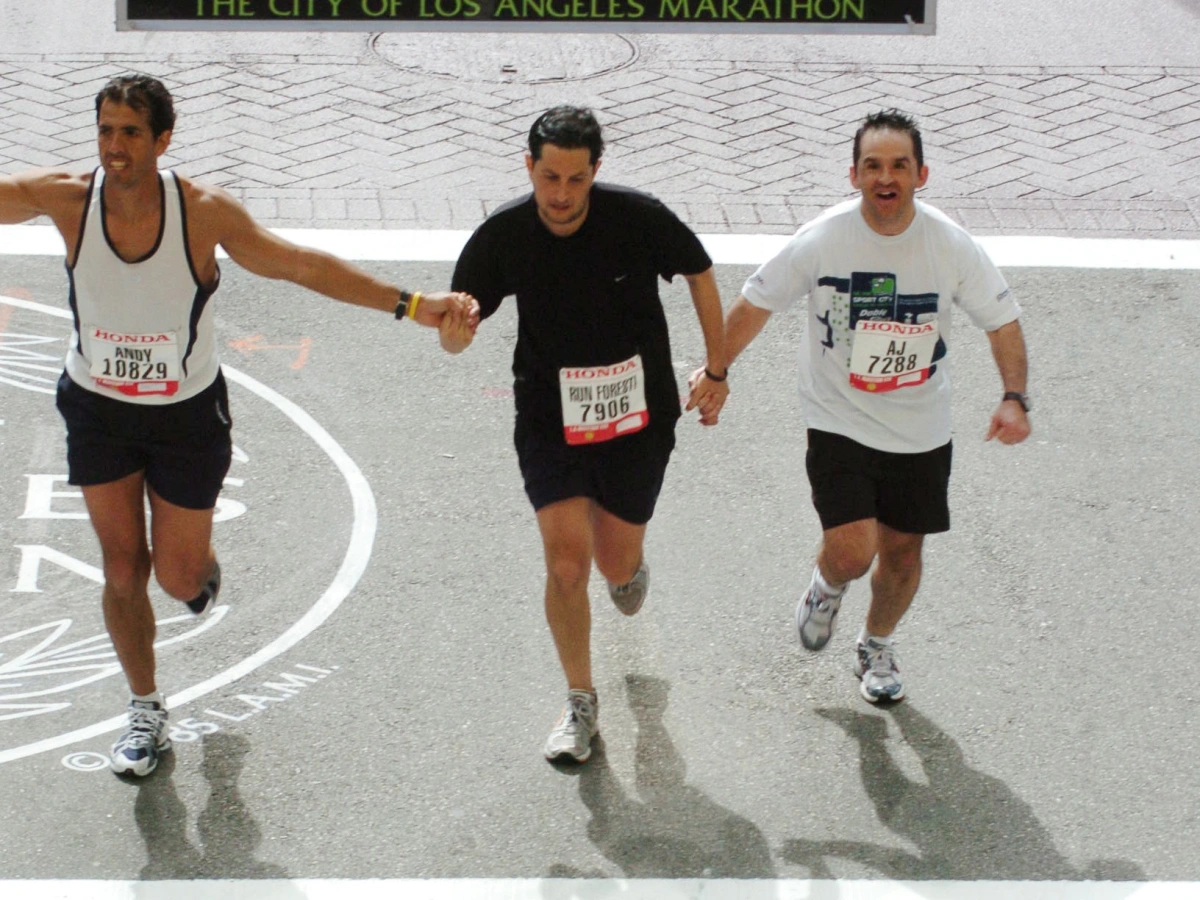
    First my toes--I ran the LA marathon this last weekend.  It was an absolutely amazing, horrible, and wonderous experience all at once.  I have never run a marathon, but have come close to several times in the past--done the training, gotten into shape, but then fallen ill at the last minute and missing the race.  This time I made the race, was fit and charged, but boy did the experience work out very very differently than I expected.  One word -- HEAT.  I've been training in my hometown of Seattle, where the temperature in the winter is in the low 40s, high hummidity, and overcast pretty much every day.  In January and February I did 6 x 18+ mile runs on the weekends, and while I always hit the "wall" (dark place emotionally, where you start to really go to a negative world where all you want to do is stop running and lay down to die), it was consistently in the 18-21 mile corridor, expected and very much a part of the marathon running lore.

    Alas, Sunday race day in LA, i get to mile 14, just past the half-way-mark, and low and behold I'm  starring at a wall unlike any i had ever seen in training--one brought on by severe heat on the course, a balmy 80 degrees in the midst of the concrete jungle that is downtown Los Angeles.  Thus began 2+ hours of absolute shear hell... which culminated in finishing the race in a state of euphroria, with a tremendous sense of accomplishment, and now, a few days later, i'm already starting to get excited about running another marathon--perhaps New York City or Paris, just as soon as my frickin toes stop throbbing! 

    Which brings me to my head... which is feeling like it is ready to explode.  At work we are running a different marathon of sorts.  You see, I've been at msft for 3 years now, and the course I've been on is rapidly approaching a finish line.  The amazing platform and tools that I've been working on--WPF, "WPF/E", Expression Studio, various features of Visual Studio related to WPF+/E, are all rapidly approaching the proverbial product finish line.  At this years Mix event, in Las Vegas April 30th, we will be delivering a hole helluva lot of product and news about our platform vision in the area of UX (user experience)... only problem is that we're at "mile 21" and instead of my toes hurting, my HEAD HURTS from the crazy amount of work we are trying to get done.  My colleagues on the product management and I are already working the insane hours that usually come in the 1-2 weeks before a big event--but we have 7 weeks to go!  That's the bad news.

    Alas, the good news: the finish line is in site.  Mix, Las Vegas, April 30... just 7 weeks to go :)

    February 11

    Korea and Japan Customer Visits

    Beau downing some yummy Korean foodMy second week in Asia was packed with visits in Seoul Korea and Tokyo Japan.  It was my first time in Korea, which was just awesome to finally see in person--amazing food, sights, sounds, friendly people, and an incredible talent pool of great designers.  Beau Ambur, CEO of San Francisco design agency Metaliq, was with us on our visits to these countries which was a lot of fun for all of us--it was great having a US designer with us with practical experience in WPF and Expression tools, and it was also fun to see him (as a Flash god) interacting with the local designers and making the cross-continent connection.  Metaliq did a contract project for us for a Burton Snowboards demo we had shown at some events in the US, and when I had told Beau over a beer one day that we were going to Asia, he expressed interest in joining as he had never been to the region and had always wanted to--next thing we knew we were there, a little bit of a "wow, this actually happened" moment for both of us.   Beau was a real trooper, as we had absolutely packed days with customers and press--i hope we made it up to him with the fun meals.  Here he shows his sportsmanlike approach to the food, tasting the raw meat marinated in chilies and papaya--something that other members of our troupe couldn't handle so well.

     Kobalt60 demo'ing some RIA apps

    We visited some very cool agencies to check out the interactive design work being done for web and mobile phones in Korea, such as D'strict (awesome visuals and use of interactive video and virtual 3d environments--their website is killer and award winning as well) and Kobalt60 (more application/RIA type apps).  Here's a photo at the Kobalt60 office, Beau on the right taking in the cool apps.  Day one in Seoul was *really* long, with meeting after meeting jammed in--however the evening was capped off with a gathering of about 120 designers at the msft office where we went through our presentations to an enthusiastic and engaged audience.  Designers here, like other places i've presented, are always a little skeptical at first when they hear about msft's story re: design technology, but once we have a chance to talk about our vision, our platforms, and our tools strategy, the general feeling is always one of general curiosity and desire to learn more.  In the crowd here we had UX leaders from top agencies, as well as many folks form mobile phone design teams at LG, Samsung, and Motorola--it was fun to talk to them in side discussions that evening and the next day about the mobile phone space, and the requirements they have for building better experiences on next generation devices.

      Beau and I presenting for the 5th time that day (tired!) Expression demo and discussion in Seoul

    Everyone talks about how much better the mobile phones are in Korea than in the US.. but it isn't hyperbole.  Most of the phones here are receiving television broadcasts, have kick-ass broadband capabilities, and consumer usage patterns that go well beyond how US users would even dream. 

    Checking out the amazing mobile phones for sale An example of a rich animated UI on a Korean cell phone

    In Japan we did some group presentations to our many partners already using WPF--Japan has created some of the most interesting early samples of what can be done with our new platform.  One of the most unexpected examples is the 3D animated concept piece called Dominoken, created by agency Bascule.  Our partners had lots of questions about WPFE, and feedback for us on WPF and Expression Blend.  A highlight for us was visiting one of the partners,2nd Factoryy, which has dedicated team of developer and designers working on several WPF apps.  The team had a voracious interest in more training materials, samples, and connection to community as they are already pushing the limits of what we have provided to date--a great lesson for us to take back the office (you can never provide enough samples for a new technology!)

    2nd Factory team in Tokyo

    Beau striking  the Bill Murray pose from Lost in TranslationOh, and what visit to Tokyo would be complete for fans of Sophia Coppola's Lost in Translation without a visit to the Park Hyatt; using some very long shutter speeds, and numerous takes, we were able to get Beau recreating Bill Murray's Santory Whisky pose from the film.

    February 04

    China Visit to Beijing and Shanghai Design Agencies

    For me this week was all about the "wow", but not the Windows Vista launch campaign kind (although i did see a ton of "wow" Vista ads all over town)--rather, it was my first visit to the amazing country of China, with visits to both Beijing and Shanghai.

    We started off our customer visits at the ChinaVisual.com offices where we met with some of their editors and founder who's nickname is "Byteart".  China Visual is an amazing online community that spans across many design disciplines China Visual office space and teamincluding web and interactive.  I did an informal interview with some of their editors which will be posted on their site with Chinese subtitles--i'm really curious to see how that carries since it was a somewhat rambling chat but very fun.  I was really surprised by their questions, which were very specific and showed a great understanding of the software business, the web and interactive space, and a curiosity re: US business and culture.  It was my first glimpse of a "creative workspace" on the trip, and their office space had common themes that I saw throughout the trip--a ton of creative/technical folks in wide open interior spaces--very similar to US and "western" design firm's offices.  What was particularly cool about the China Visual office space is that they had decorated the room with some photography and illustrations/graphics from a customer show they were planning for the following week, which served as good "walking the life of the user" reflection for their staff, busy cranking away at computers building out their application and editing content.  I found a fellow film lover in one of their editors, Lusheng, who asked me about David Lynch's new film Inland Empire--just goes to show you that "the language of cinema is universal".  It was really fun to connect to a shared passion (Mr. Lynch) with someone from such a different cultural experience... in the same way that "design" in general would appear as a common passion amongst the many Chinese designers we met throughout the visit.

    Interview with China Visual.comMe at the China Visual office


    The next day we organized a customer meet and greet to talk about User Experience design and the opportunities for design in software--it was at this *radical* club/restaurant that apparently was designed by Philippe Starck, "LAN Club" was the name... the staff was constantly reprimanding all of us for taking pictures (presumably to protect the uniqueness of the space from being copied by others elsewhere).  It was a great location for our meeting with 30 or so of the tope designers in various fields in Beijing. 

    We also had several more intimate 1:1 meetings with agencies: Digital Hail CEO Deng Xiao and his team showed us some cool WPF based apps they've built for Windows Vista, including a prototype for a social gaming environment/community space that was unlike anything I've yet seen in WPF (I hope they'll finish it up and post to their website);  Energy Source showed us their portofolio (amazing) including their integrated marketing campaigns that span web and location based experiences for top global brands; and we got to visit the "YouTube of China", Tudou.com, which has a killer app and amazing growth rates/content that mirror the rise of that other web-video site in the US.

    Tudou.com office graffiti decoration Tudou.com reception area mural

    Energy Source creative staff at work!  Energy Source developers at work

    All of my US friends who have been to China China construction everywhere...
    told me in advance of the vast number of new construction projects that dot the skyline in China's cities, indeed, i must have counted 50 buildings being raised... it was a apropo metaphor for the incredible development potential of China's creative and technical communities--everyone we visited seemed to be bursting at the seems with ideas, energy, and optimism for the future potential of their business' and China itself.  I came away from my brief visit inspired myself, with a bunch of ideas of how we (msft) shoudl be thikning about the opportunity for our tools and platforms in the China market.  That, and all the yummy food, nice people, and amazing sites... I can't wait to go back and visit again!

    January 29

    Expression Sessions and Asia

    Ok, I think it’s time I learned to actually get some inline pictures into this blog thing—way too much text.  I think in colors and images, might as well have that reflected in these posts! 


    Oh, and I have to chime in on our ExpressionSession sessions… I was in SF and Chicago in the last week, lots of fun, great hanging out with over 600 designers and hearing feedback from the presentations and demos… NYC is this week and we also have “Designertopia” event in London coming up.  I’m off to China/Korea/Japan to meet with a bunch of design agencies so I’ll take this coming week as a chance to get some photos up from these events and some impressions of these all important East Asian communities…   

    Behind the Scenes Part 3- The Studio

    So what exactly goes into the thinking behind a creative suite of tools?  While the “office” suite of products is a well understood concept, there is less of a track record in creating conglomerations of tools for designers that really make sense.  Within many creative disciplines there is a tremendous focus on specific skillsets or mediums.  As a video editor myself back in the mid nineties, I had a need for motion graphics and titling software, but not sound sweetening.  Colleagues of mine who focus on “web design” may or may not have a need for a interactive tool like Flash, as they may focus on standards based site designs with PHP/ASP.NET and raw HTML/CSS on the client.  For that matter, to be honest, as a Office user myself, I increasingly find myself just using Powerpoint and Outlook…  Word and Excel are much more specialized than anything I need on a regular basis.  When we were putting together our plans for Expression Studio, we had many conversations about whether we were building individual products to solve the specific needs of a web or Windows medium, or, a solution/suite that would really be the primary solution for a discipline of design that was much less focused on technology, and much more focused on craft (hmm, in speaking of it in such terms I think I’m glorifying our approach before I’ve explained our decision—oh well).

    With Expression Blend and Web we have (effectively) two WYSIWIG tools (Web is a “standards” XHTML tool, Blend a “XAML designer”).  In some ways these two pieces of the studio might thus stand on their own, as the desire to build a XAML interface vs. a XHTML site are today somewhat silo-ed entities.  But if you look at some of the killer “Windows” and “Web” apps that are emerging, particularly in the last year, it is clear that the dividing line between a web/windows app is an increasingly meaningless distinction.  The best Windows apps today incorporate the power of the network and “cloud”, while taking full advantage of the desktop hardware, local storage, connectivity to hardware devices, and a variety of presentation contexts (such as the living room, desktop, or notebook on the road) for optimal end user experience. Similarly, the best “Web” apps today increasingly offer richer, less-latent, more productive experiences—hereto not expected in a “browser”.  Microsoft’s many platform investments, in web and media servers, client and server scripting, and SDKs/APIs for both Windows and ubiquitous browser based runtimes, likewise break down the traditional notion of web vs Windows.  

    For Expression Studio v1 we will deliver Blend, Web, Design, and Media—four products with varying degrees of direct integration.  Design and Blend are particularly well integrated, sharing a common UI, and a coupled XAML workflow that really focuses on the staged process of taking “visual design” elements and applying them to interactive interface elements/controls/layout.  Web sits a little astride for now, with a focus on XHTML and ASP.NET website development, while Media is a pure workflow play, offering a kick-ass asset management solution (note: I’ve been a fan of iView Media Pro, the product we acquired in June 2006 explicitly to bring into the Expression Studio; I first started using MediaPro back in 2000, and today have over 30,000 images/files in my catalogs that I keep track of using the tool).  As the “WPF/E” technology comes to market, the natural need for XAML markup will extend across all of the products in the family, forming a common lingua franca for describing the look and behavior of everything from a Windows application control to a interactive video website that runs perfectly on a Mac OS browser such as Safari.

    Our vision is that in the same sense that other creative tool suites have focused on Desktop Publishing and Photography, or Apple’s FCP as an all things video/media… the Expression Studio will be an integrated solution of tools for crafting the best User Experiences—whether those be for Windows, the Web, or beyond…  This is very much a still emerging market segment, one that we expect will grow rapidly in the years ahead as the creative designers and developers in the space usher in a new era of rich, compelling experiences for computers, devices, and other “surfaces” (on walls and floors, among others!

    January 17

    Behind the scenes Part 2 - UI

    Ahh, what a nice winter break.  So nice in fact that I haven’t posted  the following which I wrote while skiing in Whistler (gorgeous, recommend to anyone who hasn’t been.  Great snow, nice people, and it’s oh-so close to seattle…)

    What role does UI play in pro creative tools?

    I first started with professional creative tools back in 1986 when I was using all the early era Mac graphics packages; Hypercard, Macromind’s VideoWorks, Pagemaker, and the first crop of digital photo tools such as Digital Darkroom.  I pulled up a screen shot of VideoWorks just now, and it's actually shocking how little things have changed -- core elements of interactive design and animation are there, as they are today--transport controls, the stage, tools for direct drawing, timeline and keyframes, and the resource library full of "actors".  There have clearly been great improvements in the usability of creative pro tools, as well evolving aesthetics in terms of the “chrome” of the interfaces… but it has really been in the much more recent years that the really interesting innovation has come, and I believe that the next 5 years will be more radical still, with amazing evolutions and advancements in UI, driven by new platforms/tools for building UI, and more importantly by a new generation of designers and advancements in the craft.

    When I arrived at msft to join the Expression team one of the first things that I took up as a personal ambition for the product was to *radically* rethink the way the product looked, not to mention the way it worked (usability and workflow).  At Siggraph mid-year that first year (2004) I and many others were awed to see Apple’s new Motion product, which sported a radically new and different interface that departed from the traditional Final Cut Pro interface and Adobe After Effects look/feel/behavior.  I and others were so bowled over by the look, that it was lost on us that the tool was actually very much a v1 and not quite ready for primetime… several of my friends in production confessed to me within weeks that “yeah, it looks pretty good, but you can’t actually do anything with it yet”.  I think Apple repeated this mistake in an even bigger way with Aperture 1.0, which was so embarrassingly bad that I and other early adopters actually got a $200 store credit when they lowered the price just a few months later and rushed 1.5 to market—could there ever be a bigger mia-culpa for a 1.0 product?  The lesson to me as a marketer was two-fold: the obvious = good looking innovative UI is something that can immediately set a product apart from a crowded and iterative set of knock-offs within traditional tool segments, and more importantly, you better back up that new UI with some pretty compelling and useful capabilities… because when you fall on chrome-sex appeal you fall *hard*.  I’ve personally been very disappointed with several tools in this regard, initially with Softimage’s DS – equally amazing, if not the most amazing looking thing I’ve seen in a new 1.0 --, and more recently with Motion and Aperture—they all demoed great, but I put them away after a few hours of experimentation and haven’t gone back to them (I hear DS is now excellent, many versions later, and I’m sure Apple will keep at it and bring the motion graphics and digital photo tools to bare on Adobe’s position in those categories).  Alias’ Maya, on the other hand, nailed it all in V1—great UI innovation, with a revolutionary product; wow, what a 1.0!.  So, for Expression, specifically the Blend product (at the time code-named “sparkle”) the question was how to really pack in some gorgeous visuals and to have those drive the actual usability and customer success with the product.  I’ll let our customers tell us how we did as far as the results—but I thought I’d share how we did it from a development perspective.

    Building the UI of our UI design products

    Alas, for the Blend team we had one incredible rocky and complicated development challenge that I don’t think many products have faced, certainly not to this degree.  Expression Blend is a tool for designing WPF (Windows Presentation Foundation) based applications, which itself is built using WPF.  In this regard, Blend is the most existential app that I know of.. each change to WPF platform required iterative changes to the app itself, from a UI and behavioral perspective, as well as to the functional capabilities.  It would be as if Flash was actually built on the Flash player, or DVD Studio Pro was a DVD player based tool … it’s patently absurd to suggest such a thing of other tools, but in our case, they had to build using the tool/platform that was still being built.  This led to incredibly difficult development challenges, where every week we had massive breaking changes and as the WPF project iterated through different templating, styling, animation, etc. models the entire Blend app would blow up and need massive re-working.  Amidst this relative chaos, how could we really push the envelope on the interface of the tool itself?  The answer was, we couldn’t!  If you looked at Expression Blend in March of 2006, you saw a generic looking app with some massive usability problems.  I dare say, I for one, thought it was a real stinker, and several former colleagues at Macromedia took great relish in pointing that out to me politely whenever I saw them.  This wasn’t lost to anyone on the team—we just couldn’t pull back and focus on that area because there was literally too much going on at the platform level that had to be addressed first.  Fast forward less than 6 months and look at the app we put out in Beta Dec 2006 (effectively only 3-4 months of actual development work, given the testing and locking down that occurred before Beta), it’s really amazing what transpired.  Huge improvements to usability/utility, and a completely new look feel that goes beyond simple color palette changes, and includes new controls/modalities that we didn’t have at our disposal just weeks earlier.  The reason this was possible was because of the nature of WPF—and speaks to the very core promise of the platform. 

    Unlike traditional applications where the way a control looks, behaves, and functions are inexorably intertwined in the code that makes up the control… with WPF these concepts are separated and therefore independently editable and just as importantly iterate-able.  A team of “visual designers’ went to work on a series of mood studies and layouts for the interface, which a separate team of interactive designers ingested and applied the concepts to the interface using XAML. In traditional software UI development the next step would be for the designs to be handed off as Photoshop files or flattened PNGs, nay maybe even just a piece of paper!, and a team of developers would begin scratching their heads thinking of how to recreate those visuals using code and user drawn controls.  Not in our case.  Manuel Clement, the Blend product’s first designer, had this demo he would do internally to other msft teams that would absolutely bowl everyone over where he’d actually use an alpha version of the software to make changes to the interface controls that made up the app itself, then he’d check in his changes, rebuild, and voila—“Sparkle Eats Sparkle as he called it.. the ultimate existentialist demo, where a Blend was used to design Blend itself.  It would be nice if we could have really built the entire UI that way—but the truth is that the rapid changes in the platform and the tools always kept the working solution just beyond our reach except for a few scenarios where we got lucky; for the majority of the work we used Expression Design to design the visuals and generate XAML code, but the actual implementation into our UI set required a lot more manual work than we would have liked.  Still—we were using XAML code from end-to-end, and the inherent power of the WPF platform to fully customize the look/behavior without impacting the functionality.  Samuel Wan, a wicked Flash designer/developer and the Program Manager that did much of the actual implementation of the UI designs created by Aaron Jasinksi (visual designer) was able to work with the XAML UI, using Blend features that were working and manually when not, to rapidly implement the designs.  The speed with which the results took shape were amazing—with daily builds in august showing incredible advances each morning at 8:30 as I eagerly arrived to see what wonders the team had accomplished in the last 24 hours.  It reminded me of my days at Industrial Light and Magic, where each morning I looked forward to “dailies” (viewings of the previous day’s work on the film shots we were cooking up)—“Blend UI Dailies” if you will.  Feedback from beta customers has been very positive, particularly from our Windows Vista ISVs who had been using the product for over a year and were delighted to see their feedback incorporated into the new build(s). 

    The best part is that now that we have Expression Blend almost finished, we can increasingly use the tool itself as we design the rest of the product family’s UI and iterate on our next releases coming down the pipe.  I’ve been on numerous projects in the past where the idea of changing anything remotely as complex as what we were able to do with Blend v1 would have been an entire product cycle unto itself… the fact that we were able to ship a solid 1.0 product, with tons of usability innovations and a significant breadth of functional capabilities, plus a innovative and modern look/feel… wow, it bodes very well for software design/development in the years ahead and is harbinger of the many exciting innovations that we will be seeing very soon from the ISV community building WPF apps for Windiows.  As we bring “WPFE” to market this year we will aim to bring similar capabilities to the design-development process for rich web applications and beyond… a cornerstone of our vision for the Expression family of tools.